Tokenizing Real-World Assets: Where TradFi Meets DeFi
Real-world asset tokenization went from a PowerPoint talking point to a $12B+ market in 2025. Having watched the TradFi-DeFi convergence from the Web3 side, here's what's actually happening and why it matters.
Tokenizing Real-World Assets: Where TradFi Meets DeFi
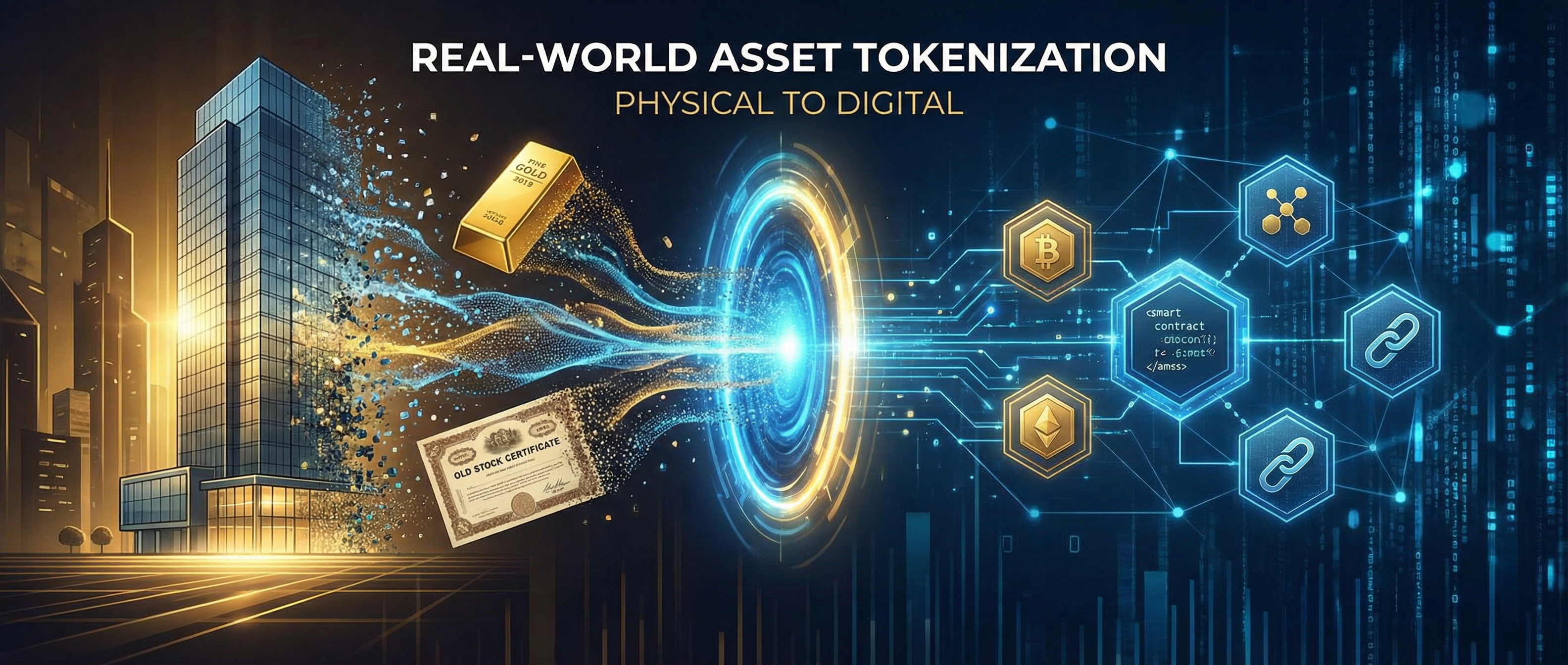
For years, the crypto industry promised that "everything will be tokenized." For years, traditional finance ignored us. In 2025, the narrative flipped — and it wasn't the crypto natives that drove the change. It was BlackRock, Franklin Templeton, and JPMorgan putting real money behind tokenized treasuries, money market funds, and private credit. Having spent the last couple of years in Web3 infrastructure, watching this convergence unfold has been one of the most validating experiences of my career.
The State of RWA Tokenization in 2025
The numbers tell the story. Tokenized real-world assets on public blockchains crossed $12 billion in total value, up from under $2 billion at the start of 2024. BlackRock's BUIDL fund — tokenized US Treasury bills on Ethereum — became the largest tokenized fund, surpassing $500 million. Ondo Finance, Maple, and Centrifuge are processing real institutional capital.
This isn't a speculative bubble. These are yield-bearing, regulated financial instruments that happen to live on blockchains. The assets are real, the yields are real, and the institutions behind them are real.
Why Now?
Several factors converged to make 2025 the inflection year:
Infrastructure maturity. The chains, bridges, and tooling finally reached the reliability bar that institutional money demands. When I was working on Web3 developer tools, one of the recurring themes was that enterprise adoption required "boring" reliability — 99.99% uptime, predictable costs, and battle-tested security. We're there now on several chains.
Regulatory clarity. Jurisdictions including the EU (MiCA), Singapore, UAE, and parts of the US have provided enough regulatory framework for institutions to engage without existential legal risk. The ambiguity that kept TradFi on the sidelines is receding.
Yield demand. In a higher interest rate environment, tokenized treasuries offering T-bill yields with 24/7 liquidity and instant settlement are genuinely competitive with traditional money market funds. The value proposition stopped being theoretical.
Stablecoin validation. USDC and USDT processing trillions in annual volume proved that digital dollars on blockchains work at scale. RWAs are the natural extension: if dollars work on-chain, why not treasuries, bonds, and equities?
What's Actually Being Tokenized
The RWA space is broader than most people realize:
Tokenized Treasuries and Money Markets
The largest category by TVL. Funds like BlackRock's BUIDL and Franklin Templeton's OnChain US Government Money Fund offer on-chain access to short-term government debt. Yields track T-bill rates, and tokens can be used as collateral in DeFi protocols.
Private Credit
Platforms like Maple and Centrifuge are tokenizing private credit facilities, giving DeFi users access to institutional-grade lending yields. This is particularly interesting because private credit has traditionally been accessible only to large institutional investors.
Real Estate
Fractional ownership of real estate through tokenization is growing, though it's still early. The regulatory complexity of real estate transactions across jurisdictions makes this the slowest-moving category, but the potential is enormous.
Commodities
Tokenized gold (PAXG, XAUT) has been around for a while, but the infrastructure is expanding to other commodities and commodity-backed instruments.
The Technical Architecture
From a technical standpoint, what makes RWA tokenization interesting is the hybrid architecture required:
[Real-World Asset] → [Custodian/SPV] → [On-Chain Token]
                          ↕
                   [Oracle Network]
                          ↕
               [Compliance Layer (KYC/AML)]
                          ↕
                    [DeFi Protocols]
You need off-chain custody, on-chain representation, oracle feeds for asset pricing, compliance layers for regulatory requirements, and smart contracts for composability with DeFi. Getting all of these layers to work reliably and in compliance with regulations is a significant engineering challenge.
This is where my experience with building at scale at GitLab feels directly applicable — the challenge isn't any single component, it's the integration of multiple complex systems with different reliability requirements and failure modes.
My Take: What Excites Me and What Worries Me
What excites me: The composability potential. Once treasuries are on-chain, they become programmable collateral. You can use them in lending protocols, structured products, and settlement systems without the multi-day clearing processes of traditional finance. Money becomes software, and software is infinitely composable.
What worries me: Centralization risk. Most tokenized RWAs rely on centralized issuers who can freeze, blacklist, or modify tokens. This is necessary for regulatory compliance, but it creates a different trust model than native crypto assets. The "decentralization" of tokenized RWAs is more about settlement infrastructure than governance.
What I'm watching: The emergence of on-chain credit rating systems and risk assessment tools. As more assets are tokenized, the data for evaluating credit risk becomes natively available on-chain. This could lead to more transparent and efficient credit markets than what exists in TradFi today.
What This Means for Web3 Developers
If you're building in Web3, RWA tokenization creates real opportunities:
- Integration work: Connecting DeFi protocols with tokenized RWA products
- Compliance tooling: Building KYC/AML layers that work with on-chain identity
- Oracle infrastructure: Reliable price feeds for non-crypto assets
- Cross-chain settlement: Moving tokenized assets efficiently between chains
The developers who understand both the DeFi stack and TradFi requirements will be incredibly valuable over the next few years. This is genuinely a blue ocean for builder-minded people in Web3.
The tokenization of real-world assets represents the most significant bridge between traditional and decentralized finance. Whether you're a DeFi developer or a TradFi engineer curious about blockchain, this convergence is worth paying attention to.